Poster Presentation Australian and New Zealand Society for Geriatric Medicine Annual Scientific Meeting 2026
The OPTIMAL trial: our experience with implementing a risk-stratified intervention to support older adults transitioning from hospital to residential aged care for the first time (#203)
Aims: To investigate implementation of a digitally-enabled, risk-stratified intervention supporting older adults transitioning from hospital to residential aged care (RAC) for the first time.
Methods: The Optimising older People's Transition from acute care Into residential aged care through Multidisciplinary Assessment and Liaison (OPTIMAL) trial is a hybrid type II stepped wedge cluster randomised controlled trial implemented across three South Australian metropolitan local health networks (LHNs). A clinical dashboard draws on electronic medical record data to identify eligible patients and stratify them based on their risk of readmission, activating delivery of a risk-stratified nurse-led transitional care intervention.
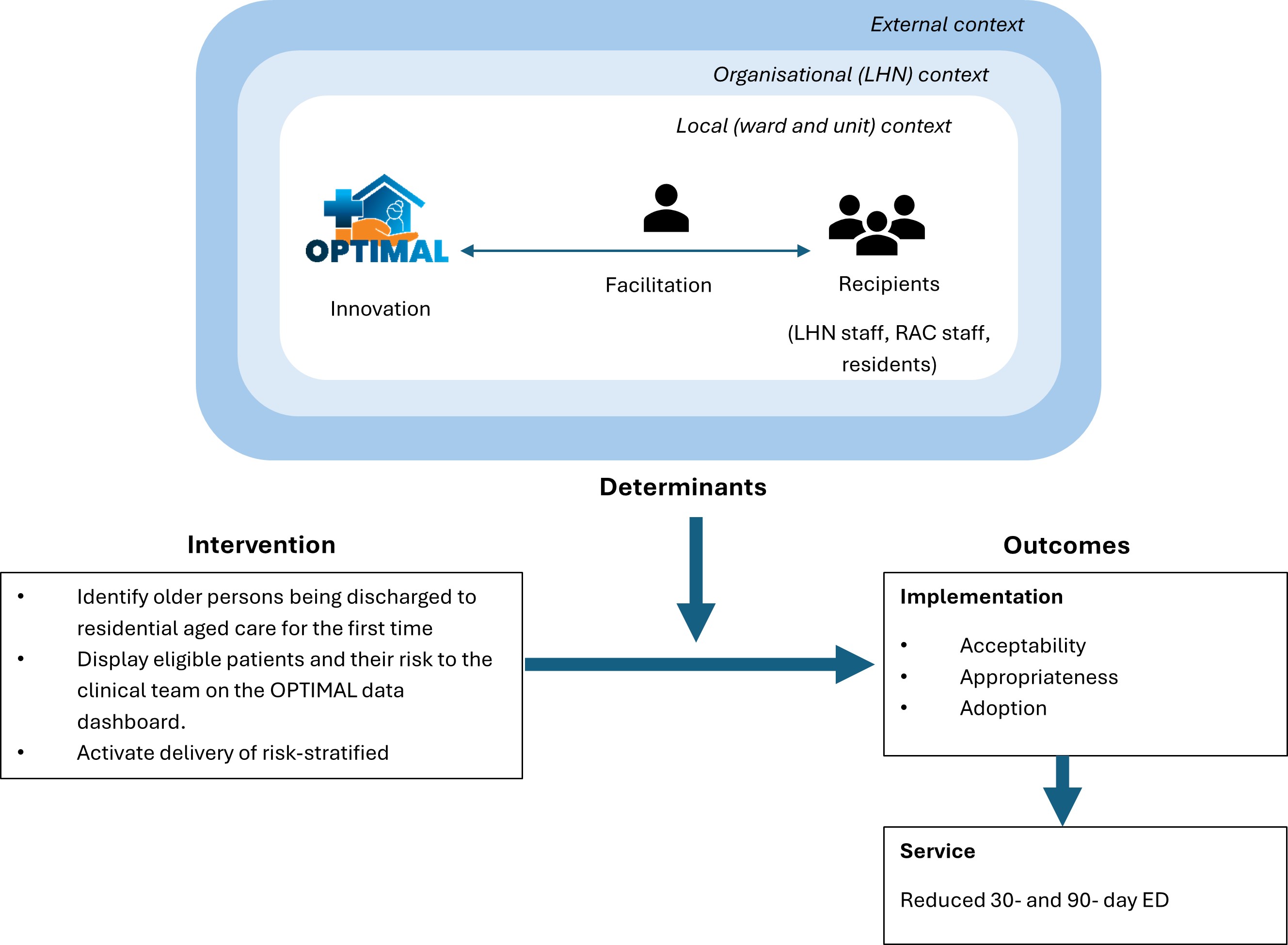
Implementation is guided by the integrated Promoting Action on Research Implementation in Health Services (i-PARIHS) framework. The concurrent mixed-methods process evaluation assesses acceptability, appropriateness, and feasibility of the intervention through methods including interviews and survey of LHN staff, interviews with RAC staff, and study nurse activity logs. The analysis maps determinants of implementation to the i-PARIHS framework.
Results: This process evaluation provides important insights into the experience of implementing OPTIMAL from the perspective of LHN staff delivering the intervention and RAC staff. Determinants influencing the acceptability, feasibility and appropriateness of the intervention will be discussed, including, perceived need for intervention, adaptability to existing workflows, skills and competencies, resources required, and leadership support.
Conclusions: OPTIMAL is considered an acceptable, appropriate and feasible intervention to support older adults transitioning from hospital to RAC. This study identified determinants of implementation that can inform further improvements to support scaling up and transferability to other settings.